A shoe that lasts 10 years and a shoe that is trash after the sole wears through can look identical on the store shelf. The difference is not how good the leather looks, but whether the sole is built so it can be taken off and replaced without ruining the top. When the sole cannot separate cleanly, wear means the end of the shoe.
Cheaper pairs cost less upfront, but once the sole peels they fail in a way that cannot be undone, while a pair built to separate can be restored for years. Construction guides show the sole stitched to a strip that can be cut and replaced. You can spot it in store by edge stitching, inner channel, and sole profile, and the table below shows when $395 beats $120 per wear.
What makes footwear truly versatile for a long-term capsule wardrobe
Versatility in a long-term capsule is not about how many outfits a shoe matches this season. It is about whether that shoe can keep covering those outfits year after year without being replaced. That shift changes the question from style pairing to structural staying power.
Three things make a shoe truly versatile over time. Occasion coverage means one pair works for work, travel, and evening without looking out of place. Material compatibility means its leather tone and texture sit easily with your neutral wardrobe. Construction longevity means its sole can be replaced, so the upper you have broken in is not thrown away.
Many lists of capsule wardrobe shoes name five essential categories that look interchangeable. A more durable filter is whether those categories form a versatile year-round foundation built from pieces that can actually be maintained. If a shoe looks versatile but its sole cannot be replaced, its functional life ends at 12 to 18 months when the tread wears thin.
The hidden cost is not the upfront price. It is buying 10 to 12 pairs that all fail at the sole edge within two seasons, because the construction was disposable from the start. If the sole can be swapped, the same upper can cover occasions for a decade.
Examining the welt line reveals whether longevity was designed in. That detail predicts cost, not just look.
Table comparing 4 shoe types — leather sneaker, chelsea boot, oxford, cemented fashion boot — on occasions covered, resoleable yes/no, estimated lifespan
How Goodyear welt, Blake stitch, and cemented construction are actually built
A Goodyear welt uses a strip of leather sewn around perimeter of the upper and onto the insole. The outer sole is then sewn to that welt, not directly to the upper. This creates a cavity between insole and outsole that is filled with cork.
That two-step stitch is why the shoe has two visible rows of stitching. One row holds welt to insole, the other holds outsole to welt. By easily resoleable and virtually waterproof design, the welt acts as a buffer. The upper never touches the outsole directly, so it can stay intact when the sole is removed.
A Blake stitch is different. It uses a single stitch to join insole and outsole to the upper in one pass through the inside of the shoe. You can see the stitch line inside under the insole. The result is sleeker and more flexible, because there is no bulky welt, but the stitch channel runs through the footbed.
Cemented construction has no stitch holding sole to upper at all. The sole is glued directly to the upper with adhesive. This is why cemented shoes often have a smooth painted edge with no visible thread. The bond looks clean at first, but it relies entirely on glue.
In cross-section the difference is clear. Goodyear shows welt separating upper insole and outsole as a distinct layer, Blake shows one straight stitch through all layers, cemented shows only a thin adhesive film. That separation is what makes replacement possible.
Because the welt is sewn to a rib bonded to the insole, cutting the outer stitch releases the outsole without cutting the upper. Blake requires a specific machine that stitches from inside, so fewer cobblers offer it, but the sole can still be removed. Cemented has no mechanical joint to cut – you must peel glue, which warps the upper.
Comparison boxes describing three constructions — Goodyear welt with a welt strip between upper and outsole and two stitch rows, Blake with a single stitch through the insole, cemented with an adhesive layer only
Why Goodyear welt and Blake stitch allow the outsole to be replaced
The resole works because the welt creates a replaceable joint. The manufacturer stitches welt to a canvas rib on the insole, then stitches outsole to welt. When that final stitch wears out, a cobbler can cut it.
As cut through enabling complete removal explains, that final stitch holding the sole can be cut through, enabling complete removal of the sole without damaging the upper. The welt stays attached to the upper, ready for a new sole to be stitched on. This is why the same pair can be resoled multiple times.
Because the upper is preserved, the fit improves with time. Cork footbed compresses to your foot shape, leather molds, and you keep that custom fit. Resoled multiple times drastically extending lifespan means the structure holds over years, not just months.
With rotated wear 2 to 3 times a week, a welted pair can deliver 10-20+ years of service, making them a cornerstone of a small capsule. That estimate assumes 3 to 5 resole cycles before uppers need replacement, with leather conditioning and heel taps in between. Daily wear shortens that to approximately 5 to 10 years before a resole is needed, with uppers lasting for several such cycles.
Blake also allows resole, but through a different path. The single stitch is picked out from inside and a new sole is stitched through the same holes. It requires a Blake machine, so you may need to send shoes to the maker, but the upper still separates cleanly from the old outsole.
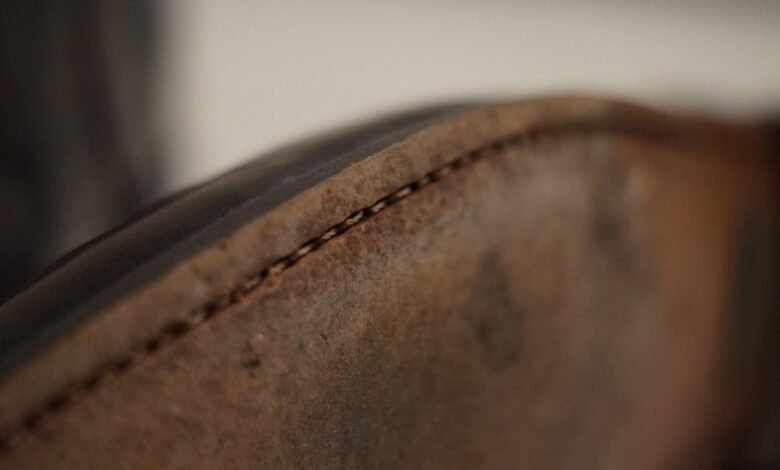
At the outsole edge, look for: visible lockstitch line around perimeter where welt meets outsole — if you see stitching, it is likely resoleable.
Four stage boxes showing new shoe, worn outsole, cut welt stitch and removed sole with upper intact, new outsole stitched to existing welt
Why cemented construction fails irreversibly when the sole wears
Cemented shoes rely only on adhesive bonding. There is no stitch to cut and no welt to protect the upper. When you try to remove a glued sole, you must peel it, which stretches and warps the vamp.
That is why totally prevents ability to resole is how makers describe this construction. Once the sole starts to peel away at the flex point, the shoe is more or less done, because the glue joint has already degraded across the whole forepart.
Other sources note cemented shoes have sole simply glued into place and cannot be resoled and consequently will not last as long as repairable shoes. The failure is not the leather wearing out, but the bond giving way. Heat, moisture, and repeated flexing break down adhesive long before the upper fails.
This makes cemented shoes inherently short-lived compared to welted construction. Attempting a resole often causes the upper to loosen and warp the heel counter, resulting in uneven creases and compromised fit. Welted designs sidestep this by anchoring upper only to insole and welt, the outsole never touches the body of the shoe itself.
On Impakter, a consumer explainer noted sole peeling off at flex points due to adhesive degradation not material wear, within months of purchase. As one poster described it, “sole peeling off, often due to adhesive degradation”. In Reddit discussions, a solution that comes up often is to switch to welted shoes that can be resoled rather than re-glued, which works because welted shoes anchor the upper only to insole and welt, so the outsole never touches the body of the shoe itself and glue failure does not warp the fit.
How to calculate footwear cost per wear across construction types
Cost per wear is total cost divided by total wears. The formula is simple, but the inputs change with construction.
Say you buy a pair of boots for $200, wear them 300 times, spend $100 to have them resoled, wear them 300 more – total cost $300, total wears 600, means 50 cents every time you wear them. That math is from total cost divided by wears explained in workwear guides. To use it, divide price by number of times you plan to wear it.
The difference appears over years. A cemented fashion boot at $120 worn approximately 80 times per year for 2 years gives approximately 160 wears before the sole peels, so approximately $0.75 per wear. A Goodyear welt oxford at $395 worn the same 80 times per year, resoled twice at $125 each over 10 years, gives approximately 800 wears for $645 total, or approximately $0.81 per wear at year 5 dropping to approximately $0.60 per wear by year 10. After the first resole, the welted pair typically costs less per wear.
That is why a $300 pair of dressy sneakers worn 200 times costs per use outperforming cheaper short-lived options that require frequent replacement. The cheaper pair looks efficient until replacement resets the cost to zero wears again.
This rubric is a self-authored practical evaluation tool built from above mechanisms for in-store use, not a published industry standard. Use it to estimate, not to promise exact lifespan, because rotation, gait, surfaces, and care change wear. Any lifespan or frequency figure here is approximately, typically, or estimated, never precise.
To apply it, estimate wears per year per pair in your capsule. If you own three to four pairs and rotate, each pair may see 100 to 150 wears per year. Multiply by years owned, add resole costs, divide.
Table comparing cemented vs welted construction on total 10-year cost and estimated cost per wear
Before committing, calculate: purchase price plus estimated resole costs divided by estimated wears — if you wear 100+ times per year, welted typically wins by year 3.
Why “genuine leather” on the box does not guarantee resoleability
Genuine leather on the box describes the upper material grade, not how the sole is attached. A shoe can have a leather upper with a cemented sole, and it will still fail irreversibly when that glued joint gives way.
Some fashion boots labeled leather use split leather coated with PU that peels like plastic at crease points. The upper looks fine on shelf but delaminates after months. Even real leather uppers do not make a cemented shoe resoleable.
By choosing cemented construction, a brand makes a deliberate choice for a disposable product — when the sole starts to detach, a cobbler cannot fix it in a way that restores original fit. Always check outsole attachment, not just upper label.
Look for stitching at edge and ask if recrafting exists. If not, treat it as short-cycle fashion, not a decade anchor.
How Allen Edmonds and Red Wing demonstrate 10+ year economics
Allen Edmonds builds 360° Goodyear bench welt that allows recrafting using same materials and last. The company notes it can restore your footwear using same materials and original last since 1922. Recrafting is a 212-step process that includes new cork, sole, heel, and refinishing.
With care and regular recrafting, a pair of Allen Edmonds Goodyear welted dress shoes can be resoled 3-5 times 15-25 years of wear before uppers need replacement. Standard recrafting package is approximately $150 with 4 to 6 weeks turnaround. That makes decade cost lower than replacing cemented dress shoes every 18 months.
Red Wing owns tannery S.B. Foot and builds boots with fully resoleable for years construction using 360 Goodyear leather welt. The brand’s Goodyear welt construction dates to 1869 and resoled and worn for decades, with more than 230 handcrafted steps per boot. Through Red Wing you can likely get boots resoled twice three new soles total before leather attaching to welt is shot, but a hand-welting cobbler can resole unlimited times using same holes.
Pros and cons matter. Allen Edmonds offers dress versatility for work and formal, and a wide last range, but break-in can take 5 to 6 wears and leather sole is slippery until scuffed. Red Wing offers work-boot durability, excellent grip from Traction Tred, and better water resistance, but is heavier and less formal for suits. If you need a lightweight sneaker for daily running or a vegan material, neither is the right buy – a cemented athletic shoe with gummy rubber makes more sense for that use.
Both examples show why investment tier can be cheaper per decade when rotated. This parallels apparel: for related guidance, see our guide on seam allowance alteration viability, which explains how extra fabric inside seams allows long-term alterations that extend clothing life the same way a welt allows sole replacement.
How to inspect outsole construction and spot resoleable shoes before you buy
Four checks reveal construction without cutting the shoe open.
Raised ridge with regular lockstitch around the perimeter signals welted.
A stitch line through the footbed is Blake; none means Goodyear or cemented.
Sole starting to lift at the flex point means adhesive is already failing.
Callout diagram on a simplified shoe profile showing where to check the outsole edge, insole interior, and toe flex point, plus the one question to ask that isn’t visible on the shoe. Below 640px the connector lines are replaced by matching numbered badges.
First, look at the outsole edge. Welted construction leaves a telltale line of stitching between outsole and welt around the perimeter that can be seen from a few feet away. If you see a raised ridge with regular lockstitch, it is likely welted.
Second, lift the insole or look inside. Blake stitch shows a single line of stitching running around the interior footbed. Goodyear welt shows no interior stitch through the insole, because the stitch goes to the rib, not through the footbed. Cemented shoes show neither – just glued fabric.
Third, check the sole edge finish. Cemented shoes often have a smooth painted edge with no thread and feel lightweight. They are not built to be resoled and rely entirely on glue. Flex the toe gently – if you see the sole starting to lift at the flex point, adhesive is already failing.
Fourth, ask retailer about recrafting. Brands that offer recrafting stand behind resoleability with original lasts. Do not pry the sole in store – visual check is enough.
Try this before you buy: run finger around outsole edge — if you feel raised stitch ridge and see lockstitch, it is likely welted and resoleable.
The Last Check
Resoleable shoes look like disposable shoes on the shelf, but the stitch around the edge is what lets the sole be cut off and replaced while the upper stays intact. Check that edge stitch and whether a recrafting service exists before you compare price tags. Buy the pair you can resole and you keep the fit you broke in for 10 or more years; ignore it and you restart cost at zero every time the glue gives way.
Frequently Asked Questions
Is a Blake stitched shoe as resoleable as a Goodyear welt shoe for a capsule wardrobe?
Blake is resoleable but needs a Blake machine, so fewer cobblers offer it and water can wick through interior channel. Goodyear uses a welt separating upper insole outsole, so it can be resoled repeatedly without piercing footbed. Choose Goodyear for boots and daily wear, Blake for sleek dress soles.
How much does it cost to resole Goodyear welt shoes and how often will I need it?
Allen Edmonds Standard Recrafting Package $150 typically takes 4 to 6 weeks. Red Wing resole is similar. With approximately 100 wears per year you may need resole every 2 to 3 years, and cost per wear typically drops below cemented after first resole.
Can you resole cemented sneakers or fashion boots to extend their life?
Generally no for contoured cup soles. You can resole some cemented boots flat bottom with limitations, but most fashion boots are done when glue peels. For a long-term capsule, reserve cemented for athletic shoes and choose welted for anchor boots and oxfords.
Are Allen Edmonds and Red Wing worth the higher price for someone who owns only three to four pairs total?
Yes. Rotated 2 to 3 times per week, welted shoes can deliver 10-20+ years cornerstone of service with recrafting preserving fit. At approximately 120 wears per year, a $395 pair resoled twice typically costs about $0.60 per wear by year 8, beating cemented replaced every 2 years.